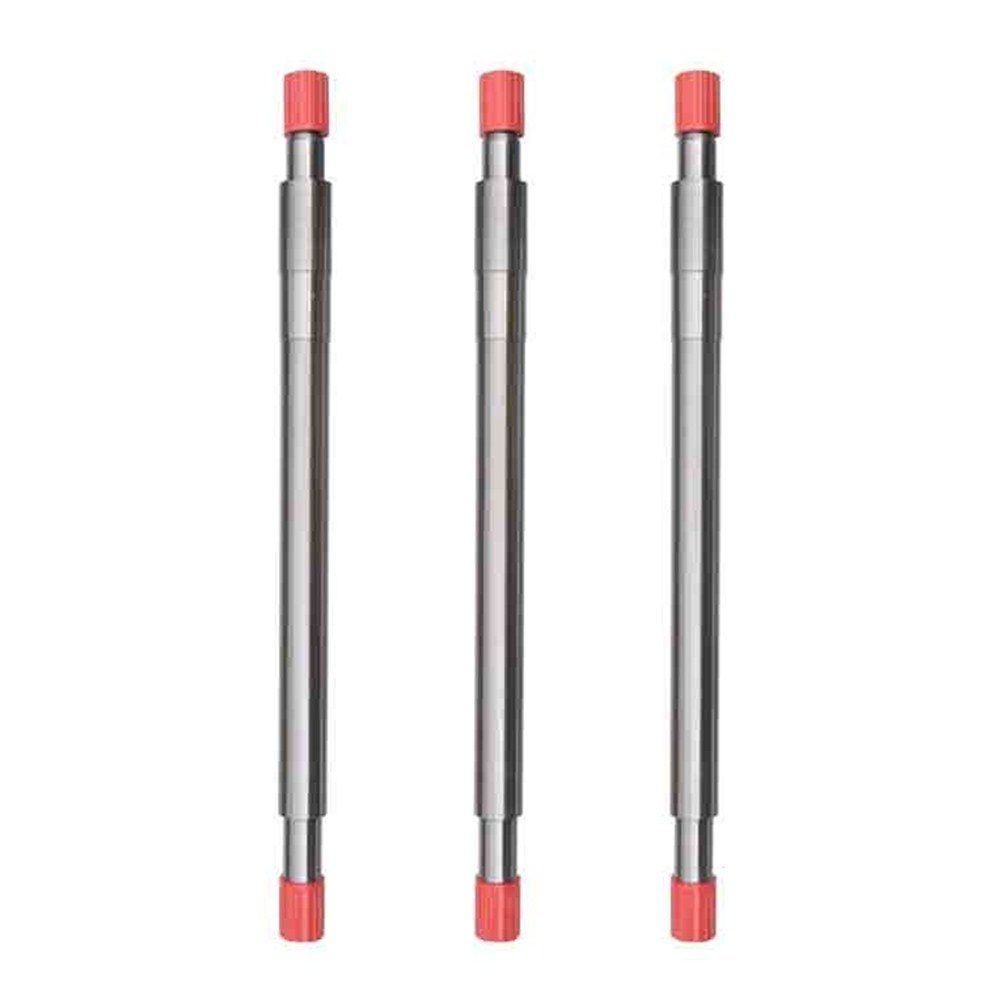
What flutes do on the drafting line
A fluted bottom roller carries fine grooves — flutes — cut along its length. On the drafting line the top roller presses the fibre strand into those flutes, and the flutes grip the strand and carry it forward at the set draft. Without that grip the strand slips, the draft varies, and the yarn coming off the frame loses its evenness.
Vindex bottom rollers are CNC-machined for ring-frame, drawing-frame, comber, simplex and compact spinning positions. The product data lists the DJ model in No.45 special carbon steel, in roller diameters of φ25 or φ27, with dynamic pulsation of ±0.02 mm and a maximum of ±0.03 mm. The flutes are part of the roller's working surface, and their condition decides how well the roller does its job.
How worn flutes show in the yarn
Flutes wear slowly, and the first signs are in the yarn rather than on the roller. Drafting becomes less even, thick and thin places appear, and the fault follows the same drafting positions. A mill may change top rollers, aprons and settings before the bottom roller is suspected, because flute wear is gradual and the roller still looks sound at a glance.
Looked at closely, worn flutes lose their sharp edges and their even depth. The strand no longer seats firmly in the grooves, grip falls away, and the roller begins to slip under the strand instead of carrying it. Where one roller in a line is worn and its neighbours are not, the yarn from its positions will show the difference first.
Refluting: restoring the flutes
Refluting means cutting the flutes again on the roller, restoring their profile and depth so the strand is gripped as it was when the roller was new. It is done on a roller whose body is still sound — true in diameter along its length, with journals and bearing seats in good order, and with enough material left to take a fresh cut.
Before refluting, the roller is checked as a whole: eccentricity is measured with a dial gauge, the diameter is checked along its length, and the journals and bearing seats are inspected. A roller that runs true and measures evenly is a candidate for refluting; the flutes are the only thing wrong with it, and a fresh cut puts it back into service.
When to replace instead
Refluting is not the answer for every worn roller. A roller that is eccentric, bent, worn oval at the journals or out of diameter along its length will still run badly after refluting, because the fault is in the body, not in the flutes. A roller whose flutes have already been cut more than once may not have enough material left for another sound cut.
The decision is made against the drawing and the maker's limit for the roller and the machine it runs on — flute condition and eccentricity together, not one or the other. A roller outside the limit for eccentricity, or worn beyond what a fresh cut can restore, is replaced rather than refluted.
What to send with your enquiry
Send these details with your enquiry:
- Machine manufacturer, model and drafting position.
- Current bottom roller model, diameter and length.
- Flute condition and the dial-gauge reading, if taken.
- Whether the fault repeats on the same positions and which spindles it affects.
Vindex manufactures bottom rollers at Surendranagar, Gujarat, and exports textile machinery spares to spinning mills in 87 countries. Send your machine details and roller sizes, and the match will be confirmed against the drawing before a quotation is given.
Frequently asked questions
What is bottom roller refluting? Refluting is cutting the flutes again on a fluted bottom roller, restoring their profile and depth so the roller grips the fibre strand as it did when new.
When should a roller be replaced instead of refluted? When the roller is eccentric, bent, worn oval at the journals or out of diameter along its length, or when the flutes cannot take another sound cut. Check flute condition and eccentricity against the drawing and the maker's limit.
Where Vindex supplies: 87 countries, all Indian states
Vindex Industries exports textile spindles and bolsters to 87 countries. Among the leading buyer markets are Bangladesh, Turkey, Indonesia, Vietnam, Uzbekistan, Pakistan and Egypt, alongside mills across Asia, Africa, the Middle East, Europe and the Americas. Country-level export pages: Export-country directory
---
Seeing uneven drafting from worn flutes? Send your machine make and model and the bottom roller sizes to Vindex Industries — WhatsApp +91 89805 05555, vindex@vindexindustries.com, or enquire at vindexindustries.com.
Frequently asked questions
Which bottom-roller conditions should maintenance cover?
Inspect flute condition, surface wear, eccentricity and contamination. The guide connects these checks with drafting consistency and periodic faults.
Why should fly and oil be removed from the drafting zone?
Contamination can interfere with consistent fibre control and roller contact. Include cleaning and inspection in the machine maintenance routine.
Choose the Correct Replacement Roller
After inspection, identify the machine process and the original roller drawing before ordering. Use the ring-frame bottom roller page for ring-spinning positions, the roving / speed frame bottom roller page for simplex machines, or the fluted roller reference page to describe the working profile. Keep each roller position and quantity separate in the enquiry.